
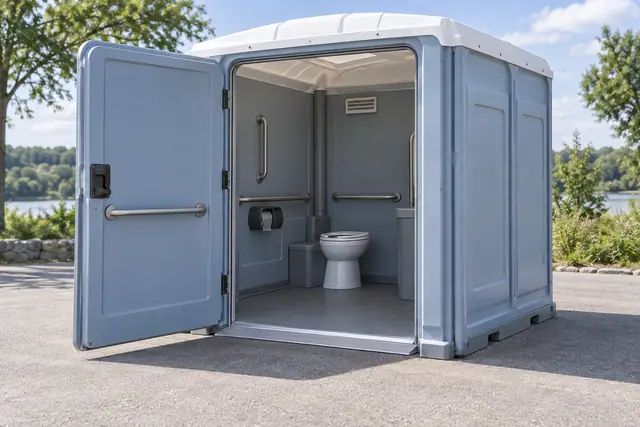
Describe the access needs before choosing the model
Accessible portable restroom planning includes the equipment and the space people use around it. A suitable unit can become difficult to reach when a queue, table or wash station occupies its approach. Review the arrangement while the activity is operating, not only on an empty site.
Tell the provider about the people using the site and the responsible planner’s requirements. Request the actual model specifications, including entry and interior features. A general category name or a larger-looking cabin is not enough to establish suitability for a particular user or compliance for an entire event.
Compare ordinary and accessible facilities as one usable arrangement. Confirm washing access too: a separate wash point should be reachable and usable by the intended users. A premium cabin or trailer is not automatically the accessible option, and an accessible toilet does not automatically include every comfort feature.
Make waiting space part of the layout
Sketch how people leave the activity, approach the toilet and return after washing. Include the likely waiting line at busy moments. Ask the responsible planner to assess surface, level changes, entry space and the complete route under the applicable requirements.
Consider a queue for ordinary cabins that runs across the accessible entrance. Moving a sign may redirect the line, but the revised arrangement still needs clear usable space and consistent supervision. Do not use the accessible approach as overflow storage or a convenient place for spare chairs.
Keep delivery and servicing from undoing the plan
Confirm a permitted placement and suitable provider access before ordering. Explain the actual surface, approach and handling conditions, including any restrictions that will apply once guests arrive. Delivery suitability and user accessibility are related questions with different practical requirements.
Agree how the setup will remain available during cleaning or tank servicing and how temporary obstruction or damage is reported. Staff should keep the intended route clear and contact the provider about problems. They should not improvise ramps, alter equipment or relocate units without approved arrangements.
Include the full use period in the quotation
Count staff and setup or breakdown crews as well as the principal visitors. Explain occupied hours, demand patterns and existing facilities. Confirm the accessible equipment, washing, cleaning, tank care and consumables needed throughout the rental rather than specifying only a delivery quantity.
Ask for the arrival, hire and collection arrangements in writing, with a contact who can address changes. If the audience or layout changes, revisit the provision before opening. The supplier’s equipment description should support the responsible planner’s review, not replace it.
Questions before you book
Can ordinary queues use the space in front of the accessible unit?
Plan waiting areas so they do not block the accessible approach or entry. Have the responsible planner assess the complete operating layout.
Does ordering an ADA-labelled unit certify my event?
No. Confirm the actual equipment specifications and have the responsible organiser review the site, approach, washing and applicable requirements.